Green Buildings, Stronger Portfolios: Why ESG Is Now a Commercial Real Estate Imperative
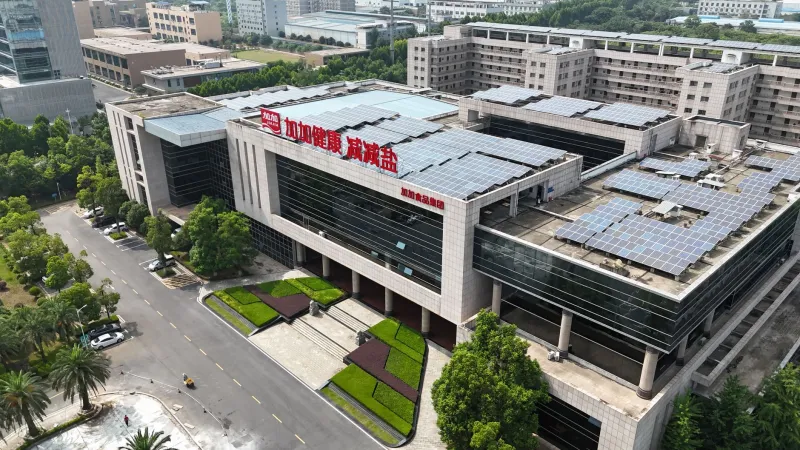
Not long ago, sustainability in commercial real estate was largely a marketing footnote — a solar panel here, a recycling program there. Today, Environmental, Social, and Governance (ESG) criteria have become central to how institutional tenants select properties, how lenders structure financing, and how investors measure long-term portfolio health. For commercial property owners who have yet to formalize an ESG strategy, the competitive window is narrowing.
At Allegiance Property Solutions, we work with commercial property owners across a range of asset classes — from suburban office parks to urban mixed-use developments — and the pattern is unmistakable: ESG-aligned properties are leasing faster, retaining tenants longer, and commanding measurable rent premiums.
What Tenants Actually Want — and Why It Matters to Owners
The shift in tenant expectations did not happen overnight. Over the past several years, major corporations have established carbon neutrality pledges and Scope 3 emissions targets that extend directly into their real estate decisions. A Fortune 500 company that has committed to net-zero operations by 2035 cannot, in good conscience, sign a long-term lease in a building with antiquated HVAC systems and no energy benchmarking data.
But ESG demand is not limited to large enterprises. Mid-sized professional services firms, healthcare organizations, and even boutique retail tenants increasingly ask about LEED certification, ENERGY STAR scores, and indoor air quality metrics during the site-selection process. In competitive urban and suburban markets — think Dallas, Denver, Atlanta, and the greater Pacific Northwest — buildings without credible sustainability credentials are being passed over in favor of those that can document their performance.
For property owners, this translates directly into occupancy risk. Ignoring ESG is not a neutral stance; it is a decision to compete for a shrinking pool of less-selective tenants.
Which Green Upgrades Deliver Genuine ROI
Not every sustainability investment yields equal returns, and property owners must approach capital allocation with discipline. The upgrades that consistently demonstrate measurable financial returns include the following:
Energy Management Systems and LED Retrofits Building automation systems that optimize heating, cooling, and lighting in real time can reduce energy consumption by 15 to 30 percent annually. LED lighting retrofits, often eligible for utility rebates, typically achieve payback periods of two to four years and reduce maintenance costs significantly.
HVAC Modernization Post-2020, indoor air quality became a tangible leasing factor. Upgrading to high-efficiency HVAC systems with improved filtration not only reduces operating costs but also addresses a concern that many corporate tenants now list explicitly in their real estate requirements.
EV Charging Infrastructure Electric vehicle charging stations have evolved from a novelty to an expected amenity in many markets. Installation costs have declined considerably, federal tax incentives remain available under the Inflation Reduction Act, and the presence of EV infrastructure is increasingly cited as a differentiator by commercial tenants with sustainability mandates.
Water Efficiency Improvements Low-flow fixtures, smart irrigation systems, and greywater recycling programs can reduce utility expenses while contributing to LEED points and ENERGY STAR scores — both of which have documented correlations with higher asking rents and lower vacancy.
Solar and On-Site Renewable Energy While rooftop solar carries higher upfront capital requirements, the combination of federal investment tax credits, declining panel costs, and the ability to offer tenants access to renewable energy credits makes this a compelling long-term investment for many commercial property owners.
Marketing Sustainability to Attract Quality Tenants
Acquiring ESG credentials is only half the equation. Communicating those credentials effectively to prospective tenants is equally important. Property owners should consider the following approaches:
- Obtain third-party certifications. LEED, ENERGY STAR, WELL, and BREEAM certifications provide independent validation that resonates with sophisticated tenants. These labels carry weight precisely because they cannot be self-awarded.
- Publish transparent performance data. Many larger tenants will request energy use intensity (EUI) data, water consumption figures, and waste diversion rates. Having this information readily available signals operational sophistication and builds trust during the leasing process.
- Align with local sustainability programs. Cities such as Chicago, New York, and Los Angeles have mandatory benchmarking and disclosure requirements. Proactively participating in voluntary programs beyond the legal minimum demonstrates a genuine commitment that distinguishes your property from competitors doing the minimum.
- Incorporate ESG metrics into property marketing materials. Listing descriptions, broker packages, and virtual tours should prominently feature sustainability attributes — not buried in footnotes, but presented as primary value propositions.
The Governance Dimension: Often Overlooked, Always Important
Most discussions of ESG in real estate focus heavily on the environmental component, but the governance dimension deserves equal attention from commercial property owners. Governance refers to the transparency, accountability, and ethical standards that govern how a property is managed and how decisions are made.
For tenants, governance manifests in questions such as: How quickly does property management respond to maintenance requests? Are lease terms fair and consistently applied? Is the ownership structure transparent? For institutional investors and corporate tenants, poor governance is increasingly treated as a risk factor that can disqualify a property from consideration, regardless of its physical condition.
Allegiance Property Solutions approaches governance as a foundational element of professional property management — not an afterthought. Transparent reporting, clear communication protocols, and documented maintenance standards are not merely best practices; they are the infrastructure upon which durable tenant relationships are built.
The Cost of Inaction
The financial case for ESG investment in commercial real estate is no longer speculative. Research from CBRE, JLL, and NAIOP consistently shows that certified green buildings command rent premiums of 5 to 20 percent over comparable non-certified properties, experience lower vacancy rates, and achieve higher sale prices when transacted. Meanwhile, lenders — particularly those with their own ESG commitments — are beginning to offer preferential financing terms for energy-efficient properties and, conversely, to scrutinize the long-term value of properties that carry high transition risk.
Property owners who delay ESG investment are not simply foregoing an opportunity; they are accumulating a liability. As building performance disclosure requirements expand to more jurisdictions and as tenant expectations continue to harden, the cost of retrofitting an obsolete building will only increase.
A Strategic Lens, Not a Compliance Checklist
The most effective ESG strategies in commercial real estate are those developed with long-term investment objectives in mind — not those assembled reactively in response to a prospective tenant's questionnaire. At Allegiance Property Solutions, we help commercial property owners evaluate their portfolios through an ESG lens, identifying which improvements align with their financial goals, their tenant base, and the specific demands of their local market.
Sustainability, properly understood, is not an expense. It is a form of capital allocation that positions a property to attract better tenants, secure more favorable financing, and preserve asset value over time. In a market where the definition of a quality commercial property is actively being rewritten, ESG alignment is not optional — it is the new baseline.